How Do Escape Rooms Stay in Business?
Same rooms, same puzzles, new groups every night. Here is the business model that keeps escape rooms open, and the leaks that close them.
 The GoFish.Rocks Team•November 25, 2026•5 min read
You solved the room, rang the bell and took the group photo with the “WE ESCAPED” sign. Then on the drive home somebody asked the real puzzle: how does that place actually make money?
Fair question. Once you have played a room, you usually don’t play it again. So how do escape rooms stay in business when every customer is, by design, a one-time visitor to each room? The answer is a pretty clever business model, plus a few habits that separate the rooms that last from the ones that become a vape shop.
The escape room business model in one sentence
Build a room once, then sell the same hour to a new group over and over, at a per-person price. Everything else is about filling those hours and keeping costs from eating the ticket.
How escape rooms make money
1. Per-person tickets, not per-room
Most rooms charge each player, often with a minimum group size. A group of six pays six tickets. That makes every extra player almost pure margin, because the room, the staff and the rent cost the same whether four people show up or eight.
2. Selling the same slot again and again
A room’s real product is its time slots. Here is a simple example. Say a 60-minute game needs 30 minutes to reset, so each slot takes 90 minutes. Open from 4 pm to 10 pm and one room can run four games a night. Fill them with six players at $35 each and that is $840 a night from one room. Two empty slots and you just lost $420. (The puzzles don’t care. Your landlord does.)
3. Multiple rooms at once
Two or three rooms running side by side multiply those slots without multiplying the front desk. One game master can often check in one group while another group is mid-game.
4. Private events and team building
Birthdays, bachelorette parties and corporate outings book the whole venue or several rooms at once. These groups plan weeks ahead and fill weekday afternoons that would otherwise sit empty.
5. New rooms bring old customers back
Fans who beat your rooms will come back when you open a new one. Retiring a tired room and building a fresh theme every so often keeps your best customers returning.
What it costs to keep the doors open
The model works, but it is not cheap to start. A 2025 cost breakdown from escape room builder Indestroom calls a full launch a six-figure commitment with a 12 to 24 month payback period. Our guide to starting an escape room business breaks down the startup costs.
After opening, the big ongoing costs are rent, staff, replacing broken props (players are not gentle) and marketing. Then there are the quiet costs that are easy to miss:
- No-shows. A group that doesn’t show is a slot you can’t resell.
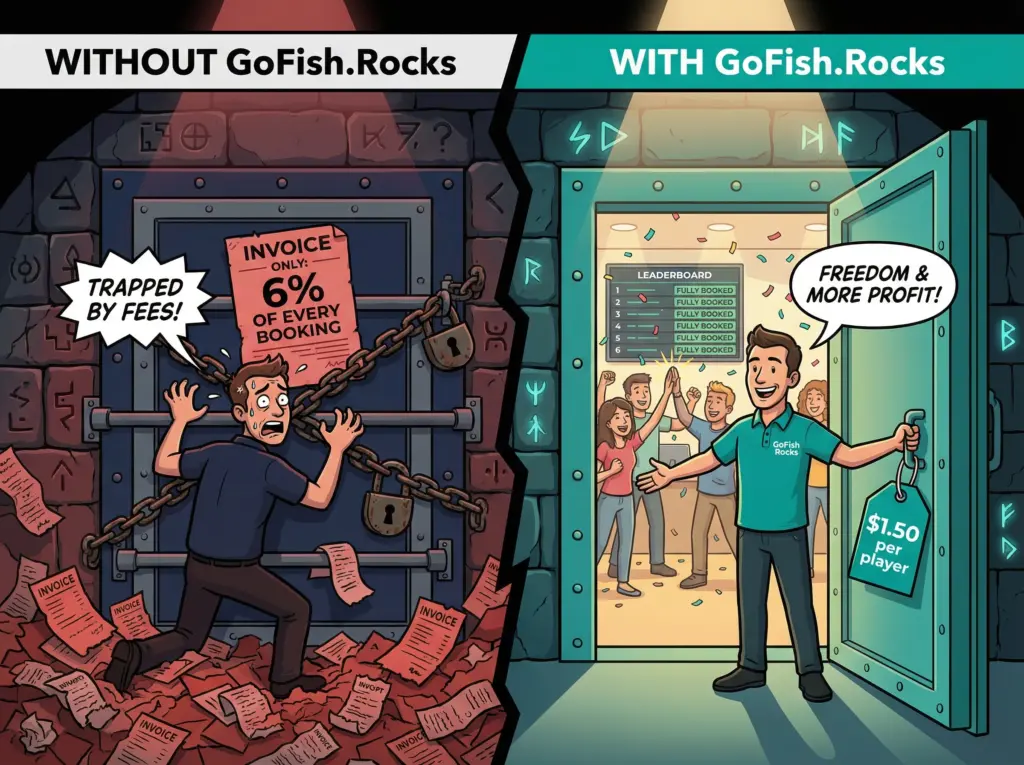
- Booking fees that grow with your price. A percentage fee takes more every time you raise tickets.
- Phone tag. Every booking taken by phone is staff time not spent running games.
- Bad reviews. One “the lock was broken” review can cost you a month of new groups.
The habits that keep escape rooms in business
Do
- Take deposits when groups book No-shows
- Send reminders the day before No-shows
- Ask happy groups for reviews right away Reviews
Don’t
- Hold slots with no payment No-shows
- Let fees rise every time your price does Fees
- Hope people find your Google listing on their own Reviews
GoFish.Rocks handles the booking side for escape rooms. Groups book a time slot and pay on your own website, then get automated confirmations, reminders and review requests. Happy groups get sent to Google. Unhappy ones go to private feedback, so you can fix the lock before it becomes a one-star review. See the full escape room booking software page.
Why flat fees fit the escape room model
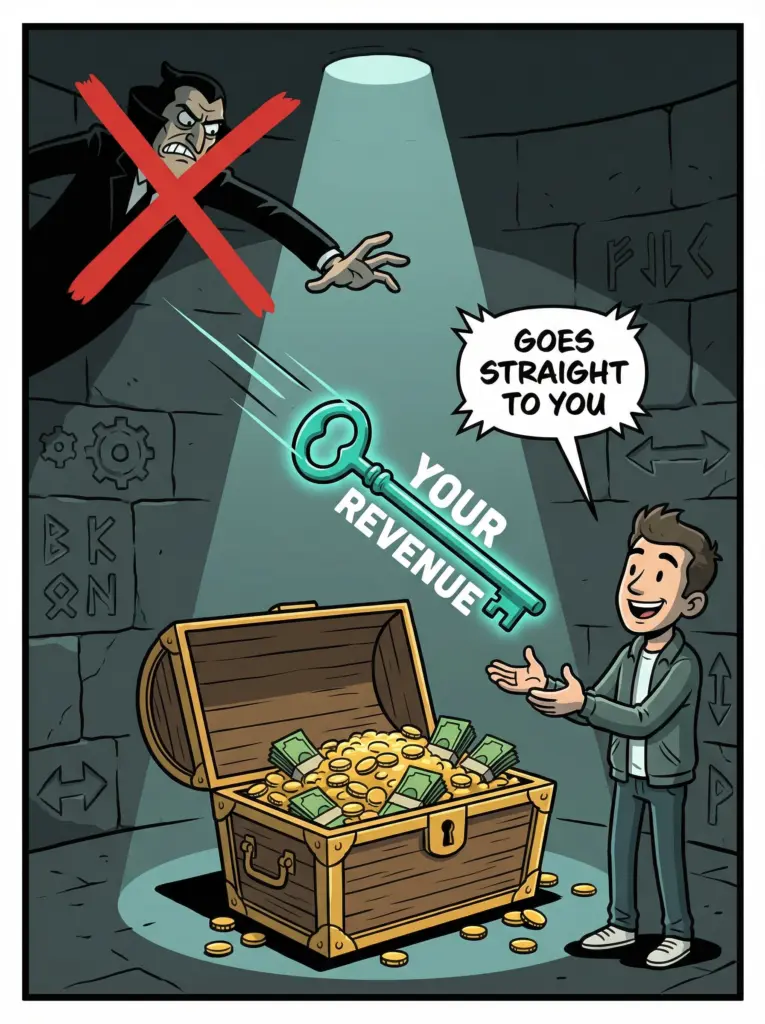
Escape rooms already think per person. So does GoFish.Rocks: a flat $1.50 per person, billed once at the end of the month, with no charge on canceled bookings. Raise your ticket from $35 to $45 and your booking fee doesn’t move. With a percentage-based system, every price increase hands them a bigger cut. Our post on subscriptions versus per-person pricing runs the full comparison, and revenue and cost control shows the season-long math.
Bottom line
Escape rooms stay in business by selling the same hour again and again at a per-person price, filling weekday gaps with private events and launching new rooms to bring fans back. The ones that close usually lose on empty slots and costs that creep up. Fill the slots, keep the fees flat and keep the reviews coming. Curious how that looks for your rooms? Get your free demo or call 805-871-0044.
Frequently asked questions
How do escape rooms make money?
They charge per person and sell the same time slot to a new group many times a week. Private events, team building and new rooms add more revenue.
Are escape rooms profitable?
They can be, but startup is expensive. Escape room builder Indestroom describes a full launch as a six-figure commitment with a 12 to 24 month payback period.
Why do escape rooms close?
Common reasons are empty time slots, no-shows, high rent and costs that grow faster than ticket sales.
What booking fee works best for escape rooms?
A flat per-person fee is easy to plan around. GoFish.Rocks charges $1.50 per person, with no charge on canceled bookings.
Fill every time slot
Online booking, reminders and review requests for escape rooms, at a flat $1.50 per person. See Escape Room Booking →