Sportfishing Ticketing Software: Selling Headboat Seats
Seat limits, walk-ups, rail spots and a manifest you can trust for open-boat fishing trips.
 The GoFish.Rocks Team•October 18, 2026•5 min read
Quick question. On your last open-boat trip, how many seats did you sell online, how many at the counter, and how many to the guy who called your cell at 4:50 am? If you had to think about it, keep reading.
Selling headboat seats is a numbers game. Every seat gets sold once, from three or four places, before the lines go in. That’s the job of sportfishing ticketing software. This post covers per-seat inventory, walk-ups, rail spots and the manifest. If you want the tool we built for this, start with our fishing charter booking software.
What is a fish ticket system?
A fish ticket system sells single seats on an open-party fishing trip. Some people call it fish ticket software or ticket software for sportfishing trips. Same idea. The boat has a seat limit, lots of people buy one or two seats, and the system keeps count so you never sell seat 41 on a 40-seat boat.
It sounds simple. It gets tricky when the same boat also runs private charters, overnight trips and half-days on the same week.
Sportfishing ticketing software starts with seat counts
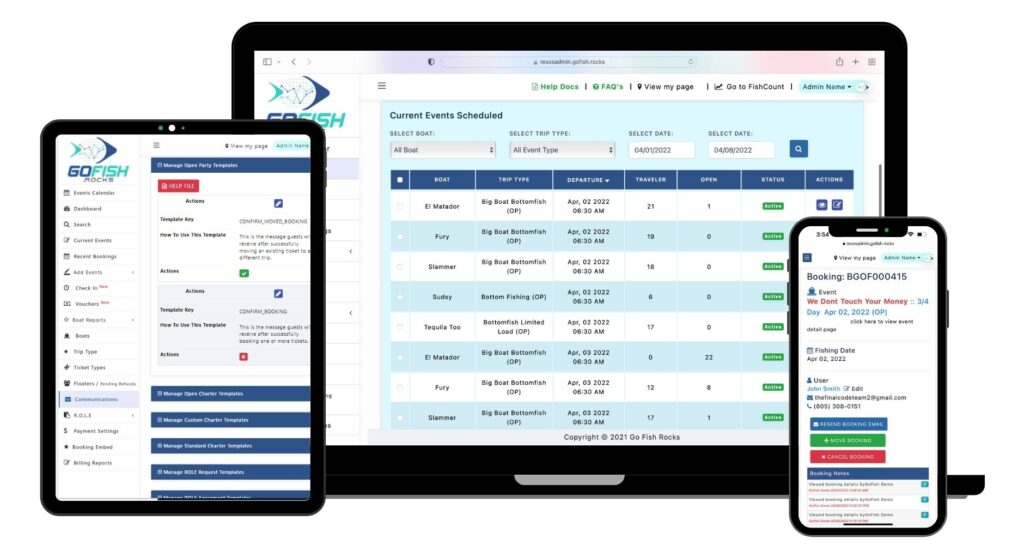
Good sportfishing ticketing software treats each departure as its own pool of seats. GoFish.Rocks does this with open-party ticketing and capacity limits on every trip.
- Overlapping departures. A full-day trip and a half-day trip on the same boat can’t both sail. The system closes the conflict on its own.
- Recurring schedules. Set your daily 6 am half-day once, with seasonal availability and blackout dates.
- Private charters in the same calendar. When a group books the whole boat, the open seats go away.
- Headboat manifest support. Built for boats that carry a crowd.
See how the calendar works on our booking and scheduling features page.
Fill the boat before anyone walks up
Sold-out trips are great. Sold-out trips with three last-minute cancellations are less great (the fish don’t care, but your fuel bill does).
A waitlist fixes that. On GoFish.Rocks, guests join a waitlist with one click. When a seat opens, the whole waitlist gets a text. The first person to pay gets the seat. Your crew doesn’t touch it.
Every seat on an open boat gets sold once. The software’s job is to make sure it’s never sold twice.
Walk-ups at the dock
Open boats live on walk-ups. We’ve worked with headboat operators for years, and the dock at dawn always has a few hopeful faces with rods in hand.
GoFish.Rocks handles walk-ups and online bookings in one system, so the seat count stays right. How you take the walk-up payment is up to your setup, so ask any vendor these questions:
- How does a walk-up sale reach the seat count, and how fast?
- Do I need special hardware at the counter?
- Can I sell a seat at the dock right up to departure?
Rail spots: first come, or pick your spot?
Some boats let anglers pick a rail spot. Others do a drawing, or first come at the dock. (Every boat has that one angler who has claimed the stern corner since 1998.)
If spot picking matters to you, ask vendors directly whether guests can choose a spot online, and how that shows on the list. Many operators keep it simple and assign spots at check-in. Either way, write your policy down and put it in your confirmation message.
A manifest the deckhand can trust
The count isn’t just good business. It’s a rule. According to the eCFR’s text of 46 CFR 185.504, the master of a covered vessel must keep a correct, written count of all passengers who embark and disembark, and have the count available ashore before departing. Check with the Coast Guard on how that applies to your boat.
GoFish.Rocks builds a USCG-compliant manifest for every departure, with a real-time headcount. Online sales, walk-ups and waitlist fills all land on the same list.
Messages that calm the dock
Half the chaos at a headboat counter is questions. What time is check-in? Is the trip still on? Where do I park? Good ticketing software answers those before anyone asks.
GoFish.Rocks sends automated text and email confirmations, reminders, weather updates and cancellation alerts, with templates you can edit and no per-message fees. Every message is logged with a delivery time stamp, so “I never got the text” is easy to check.
What charter boat ticketing software costs
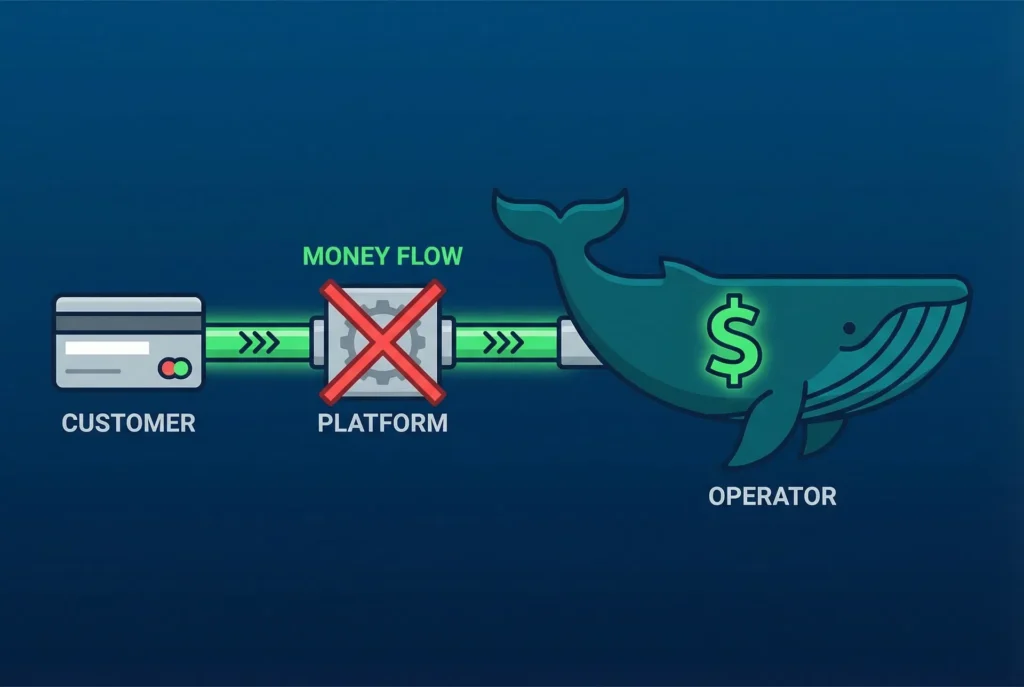
Open-boat tickets add up fast, and percentage fees add up with them. GoFish.Rocks charges a flat $1.50 per passenger, per trip. Open-party trips have no minimum. A 40-seat trip that sells out costs $60 in booking fees, whatever your ticket price. If weather cancels the trip, you pay $0.
Paul Hebert of Wicked Pissah Fishing put it this way: “Only a flat rate of $1.50 for each booking. I highly recommend them.”
Checklist for fish ticket software
Bring this list to every demo.
- Seat limits per trip that can’t be oversold.
- Charters and open seats on one calendar, with conflict closing.
- Walk-ups that update the count right away.
- A waitlist that fills seats without staff.
- A live manifest for every departure.
- A flat fee that doesn’t grow with your ticket price.
Running bigger party trips too? Our party boat booking software page covers large groups and ticketed events.
Ready to compare more options? Read our guide to the best fishing charter booking software. Setup, training and migration from your current platform are free.
Frequently asked questions
What is sportfishing ticketing software?
It is software that sells single seats on open-party fishing trips, online and at the dock, while keeping a live seat count and manifest.
Can GoFish.Rocks handle walk-ups?
Yes. Walk-ups, online bookings and private charters all live in one system, and the headcount updates in real time.
What does a fish ticket system cost on GoFish.Rocks?
A flat $1.50 per passenger, per trip. Open-party trips have no minimum, and canceled trips cost $0.
Sell every seat once
GoFish.Rocks runs open-party seats, charters and walk-ups in one system for a flat $1.50 per passenger, per trip. See How It Works →