Whale Tour Software: How to Choose One Without Paying 6% Per Ticket
Big boats, fast weather calls and a fee that should not grow with your ticket price. Here is what to look for.
 The GoFish.Rocks Team•September 16, 2026•6 min read
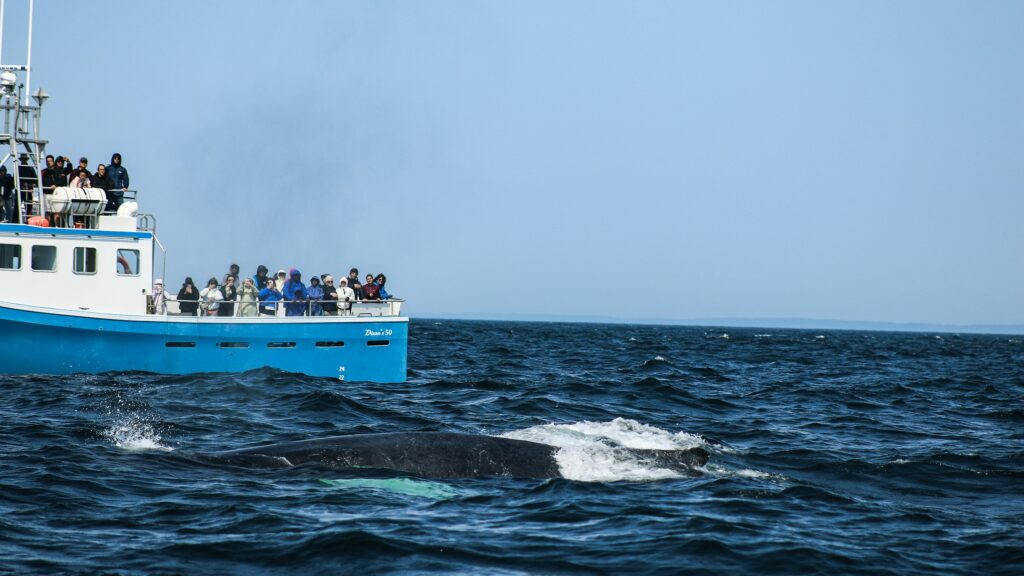
A sold-out whale watch is a beautiful thing. Sixty people at the rail, a humpback shows up on cue (they never read the schedule, but sometimes they get lucky), and everybody goes home happy. Then the booking platform sends its invoice, and suddenly you feel a little less happy.
If you are shopping for whale tour software, this guide is for you. We will cover what the software actually has to do on a busy whale watching day, how the fees really work, and the questions to ask before you sign anything. The short version: pick whale watching booking software that handles big boats and fast weather calls, and that does not take a bigger cut every time you raise your ticket price.
What whale watching tour software has to handle
A fishing charter might carry six people. A whale watch boat can carry a small town. That changes what you need from your software for whale watching tours. Here is the short list:
- Lots of seats, many departures. Morning, midday, afternoon and sunset trips, each selling individual seats. GoFish.Rocks does this with open-party ticketing across multiple daily departures, and it closes conflicting slots on its own.
- Seasons that come and go. Migration season is not all year (the whales have their own plans). You need seasonal availability, blackout dates and capacity limits you can set once and forget.
- Walk-ups and private charters in the same system. The family that shows up at the dock at 8:55 counts just as much as the one that booked a month ago.
- A real manifest. A USCG-compliant manifest for every departure, with a live headcount.
- A waitlist that works without you. When a trip sells out, guests join the waitlist with one click. If someone cancels, the whole list gets a text, and the first person to pay gets the seat.
The software does the same work whether the ticket costs $45 or $125. So why should the fee go up when the ticket does?
The fee math on a $60 ticket
This is where most whale watching software quietly gets expensive. Many platforms charge a percentage of every ticket. A percentage sounds small. Then you multiply it by a full boat, a full day and a full season (and then you go lie down for a minute).
GoFish.Rocks charges a flat $1.50 per passenger, per trip. No setup fee, no monthly subscription, and no percentage. Here is how that compares on a $60 ticket:
| Fee model | Per $60 ticket | Per 60-guest trip |
|---|---|---|
| 3% platform | $1.80 | $108 |
| 5% platform | $3.00 | $180 |
| 6% platform | $3.60 | $216 |
| GoFish.Rocks flat rate | $1.50 | $90 |
Example math only. Percentage rates shown are common rate levels, not a quote from any one company.
Now stretch that over a season. Say you run two 60-guest trips a day for 90 days. That is 10,800 passengers.
That is a $22,680 difference compared with a 6% platform. That is a lot of fuel, or a new set of binoculars for every guest (please do not do that). You can also pass the $1.50 to your guests, absorb it, or round your ticket up. The subscriptions versus passenger pricing breakdown walks through the other pricing models too.
Weather days should not cost you money
Every whale watch captain knows the dawn weather call. The wind picks up, the swell builds, and the trip is off. On some platforms, you still pay fees when you refund those tickets. That means you pay money on a day you made none.
On GoFish.Rocks, a trip that cancels for weather costs you $0. Billing happens at the end of the month, and it only counts guests on trips that actually sailed. Our guide on how to handle weather trip cancellations covers the policy side.
Good trips need good messages too. GoFish.Rocks has a “Trip is a Go” button that sends one update to every booked guest. Every message is tracked with a delivery time stamp, so “I never got a text” is easy to check. See how customer communication works.
Where your money goes
Ask every platform one simple question: where does the ticket money land first? GoFish.Rocks plugs into your own merchant account through our fair credit card processing setup, so 100% of each ticket payment goes to your bank. Most operators see deposits within 24 hours. Nobody is holding your money in the middle (we checked, there is no middle).
Your guests also stay on your website through checkout. No redirects to some other brand’s page. You also get whale sighting reports you can post on your site, showing species, how often they show up, and where. Fresh sightings are a great reason for someone to book tomorrow’s trip.
Being a good neighbor to the whales matters too. NOAA’s marine life viewing guidelines are worth sharing with your crew and your guests before every season.
How to pick the best software for whale watching tours
The best software for whale watching tours is the one that fits how your boat runs, not the one with the longest feature list. Before you sign, run through these questions. You can also compare platforms side by side on our comparisons page.
Six questions to ask any whale tour software company
If a sales rep has to “get back to you” on these, that is an answer too.
- Is the fee a percentage or a flat rate, and does it change when my ticket price changes?
- What do I pay when weather cancels a trip and I refund everyone?
- Can I sell seats on several departures a day without double booking?
- Does the waitlist fill open seats without my staff doing it by hand?
- Where does the money land first, and how fast does it reach my bank?
- Who answers the phone when something breaks on a Saturday in July?
For that last one, GoFish.Rocks offers US-based, same-day support with a real person on the phone, plus free setup and free migration from your current platform. Most operators are up and running fast, and the math never gets worse as you grow.
Fill the boat. Keep the ticket money.
Open-party ticketing, waitlists, weather alerts and USCG-compliant manifests for whale watching. Flat $1.50 per passenger who sails, $0 on weather cancellations. Book a Free Demo →